


Rise of Women’s Cricket: Breaking Barriers and Inspiring a New Era

A full stadium does not happen by accident. It is built by years of skill, patience, belief, and people refusing to treat women’s cricket as a side story.
For a long time, women cricketers played with limited funding, smaller crowds, fewer televised matches, and little of the public attention given to men’s cricket. Many balanced jobs, studies, travel challenges, and training on their own. Yet the quality of cricket kept rising. Batters became more fearless. Fast bowlers gained pace. Spinners added craft. Fielding standards climbed. Fans began to notice what had always been there, serious talent and fierce competition.
Today, women’s cricket is moving into a brighter phase. The growth is visible in packed grounds, stronger domestic leagues, better contracts, and young girls carrying bats with the confidence that cricket can be their future.

Women’s cricket has travelled a long road
Women have played cricket for generations, but recognition came slowly. The early players had to create their own space in a sport shaped mostly around men’s teams, men’s facilities, and men’s schedules.
The barriers were not only financial. They were cultural too. In many places, girls were encouraged to watch cricket rather than play it. Coaching access was limited. Safe practice spaces were hard to find. Families often worried about travel, career stability, and social judgement. Even players who reached the highest level often faced poor pay and low visibility.
Still, the game moved forward because players kept showing up.
They played on rough grounds, trained without ideal equipment, and travelled long distances for limited match fees. They proved their place through performance. Over time, national boards, broadcasters, sponsors, and fans could no longer ignore the standard of cricket on display.
The rise has not been even across every country. Australia and England built stronger structures earlier than many others. India, South Africa, New Zealand, the West Indies, Pakistan, Sri Lanka, Bangladesh, and other teams have had different paths and challenges. But the direction is clear. Women’s cricket has moved from the margins towards the main stage.
Visibility changed the pace of growth
Sport grows when people can see it. For years, women’s cricket suffered because major matches were rarely shown widely. Fans could not follow players, remember rivalries, or build emotional ties with teams. That changed as more matches came on television and streaming platforms.
The 2017 Women’s Cricket World Cup played a major role in India’s interest. India’s run to the final at Lord’s brought players such as Mithali Raj, Harmanpreet Kaur, Smriti Mandhana, Jhulan Goswami, and others into everyday conversations. Harmanpreet Kaur’s unbeaten 171 against Australia in the semi-final became one of the most remembered innings in the women’s game. It was aggressive, clean, and fearless.
That tournament did something powerful. It gave millions of viewers a reason to watch, and then the cricket did the rest.
The 2020 ICC Women’s T20 World Cup final at the Melbourne Cricket Ground also became a major moment. Australia beat India in front of a huge crowd on 8 March, International Women’s Day. The image of a packed MCG for a women’s cricket final sent a simple message: this sport can fill the biggest stages.
The 2020 Women’s T20 World Cup final drew 86,174 spectators at the MCG, one of the clearest signs that women’s cricket had entered a new public era.
Visibility does more than create famous players. It changes how families think. A girl watching Smriti Mandhana drive through cover or Shabnim Ismail bowl fast can imagine herself doing the same. A parent watching a full stadium may see cricket as a serious pathway, not a risky dream.
Professional leagues are creating stronger players
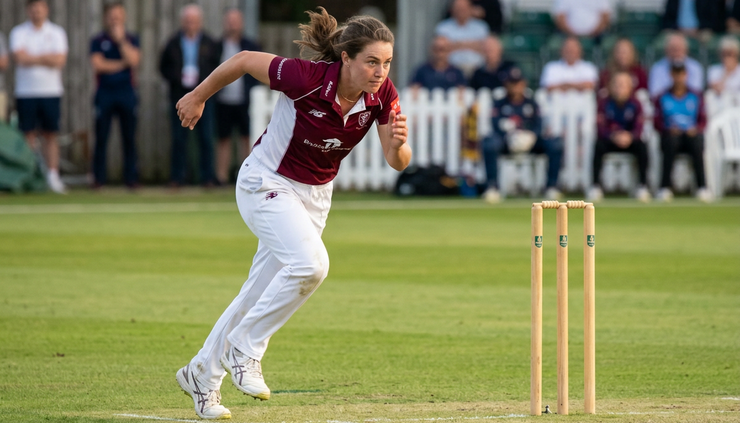
Domestic leagues have become one of the biggest forces in the growth of women’s cricket. Australia’s Women’s Big Bash League helped set a high standard for visibility, talent development, and competitive cricket. England’s domestic competitions and The Hundred brought new audiences. India’s Women’s Premier League, launched in 2023, gave the sport a major push in the country’s biggest cricket market.
These leagues matter because they give players more high-pressure matches. International cricket alone cannot create enough opportunities for every talented player. A strong league system helps bridge that gap.
Professional leagues offer several benefits:
Better match practice Players face varied conditions, stronger opponents, and tactical pressure more often.
Financial support Contracts help players spend more time training and less time worrying about basic stability.
Shared knowledge Young players learn from senior internationals in the same dressing room.
Bigger fan bases Franchises create local loyalty and bring new supporters into the women’s game.
Stronger talent pipelines Domestic performers get noticed faster when matches are visible.
The Women’s Premier League has been especially important for India. Young Indian cricketers now share dressing rooms with world-class players from Australia, England, South Africa, New Zealand, and the West Indies. That kind of exposure can speed up learning. A young bowler can watch how Ellyse Perry prepares, how Meg Lanning reads a chase, or how Sophie Devine attacks a powerplay.
India’s role in the new era
Cricket in India has a unique scale. When the country starts watching something, the whole sport feels the effect. That is why India’s investment in women’s cricket matters not only at home, but globally.
The Board of Control for Cricket in India announced equal match fees for contracted Indian women and men cricketers in 2022. That decision did not solve every gap, but it marked a clear change in attitude. It told young players that their work had value. It also placed public pressure on the wider system to improve facilities, promotion, and domestic opportunities.
The Women’s Premier League added another layer. It gave Indian fans regular access to elite women’s cricket in a familiar franchise format. The matches became easier to follow. Players became household names. Young cricketers from smaller towns could see a pathway from local grounds to a national stage.
India’s women’s team has also helped shift public imagination. For many years, Mithali Raj represented consistency, calm, and technical class. Jhulan Goswami showed what long-term discipline looks like for a fast bowler. Smriti Mandhana brought elegance and timing. Harmanpreet Kaur brought power and big-match courage. Deepti Sharma, Jemimah Rodrigues, Shafali Verma, Renuka Singh Thakur, Richa Ghosh, and others have added different skills to a more dynamic team.
The impact reaches beyond elite cricket. More academies now train girls. School-level interest is rising. Equipment stores see girls asking for proper bats and pads, not leftover gear. Local tournaments are getting more attention. Change is slow in many places, but it is visible.
The barriers have changed, but they have not disappeared
The growth of women’s cricket is real, but the work is not finished. Some top players now have contracts, leagues, and public recognition. Many others still face weak systems below the elite level.
The gap between leading nations and developing teams remains a concern. Australia’s depth, for example, comes from years of domestic structure and investment. Other countries are still building basic pathways. Without regular matches and paid opportunities, talented players can leave the sport early.
Common challenges still include:
Limited facilities in smaller towns and rural areas
Fewer women coaches and support staff
Uneven pay across countries and domestic levels
Less media coverage outside major tournaments
Shorter domestic seasons
Social pressure on girls to prioritise “safer” careers
Lack of high-quality age-group cricket in some regions
There is also the risk of celebrating a few stars while ignoring the base of the pyramid. A sport cannot grow on elite tournaments alone. It needs school cricket, district teams, age-group systems, safe travel, trained coaches, medical support, and regular competition.
The media plays a part too. Coverage should focus on skill, tactics, performance, and context. Women cricketers deserve the same sporting seriousness given to men. Their cover drives, slower balls, captaincy choices, and fitness standards should be discussed as cricket, not as a novelty.

The style of play is becoming bolder
One reason women’s cricket is attracting more fans is the quality of the cricket itself. The modern game is faster, sharper, and more athletic than ever.
Batters are clearing boundaries more often. Openers attack early. Finishers train for power hitting. Bowlers use slower balls, cutters, yorkers, bouncers, and clever field settings. Wicketkeepers stand up to the stumps with quick hands. Fielders throw themselves around with the same intensity expected at the highest level.
T20 cricket has pushed much of this change. Shorter formats reward quick scoring, sharp decision-making, and visible drama. But the influence has reached one-day cricket and Test cricket too. Teams now chase bigger totals with more belief. Captains take bolder calls. Players grow up with more fitness awareness and better access to analysis.
This does not mean women’s cricket needs to copy men’s cricket. Its value is not measured by direct comparison. The game has its own rhythm, match-ups, heroes, and tactical patterns. Fans who follow it closely know the appeal comes from skill and contest, not from imitation.
The best matches show the full range of the sport:
A left-arm spinner setting up a batter over several overs
A fast bowler using bounce on a helpful pitch
A young opener taking on an experienced attack
A captain saving the best bowler for a key match-up
A lower-order batter changing the result in ten balls
That is cricket at its best. The gender of the players does not reduce the tension or the quality.
Role models are changing the dreams of young girls
The most powerful effect of women’s cricket may be cultural. When girls see women treated as serious athletes, the idea of who belongs in sport expands.
Role models matter because they make ambition feel normal. A girl in Mumbai, Ranchi, Guwahati, Jaipur, Kochi, or a small village may not know how to reach the Indian team. But she can see proof that someone has done it. That proof matters.
The rise of women’s cricket has also changed conversations at home. More parents now take daughters to nets. More schools include girls in cricket training. More local coaches understand that girls need the same basics as boys, good technique, match awareness, fitness, and confidence under pressure.
This shift can affect more than cricket. Sport teaches discipline, teamwork, failure management, and self-belief. A girl who learns to bat in a match situation also learns to handle pressure. A bowler defending runs in the final over learns courage. A captain setting a field learns leadership.
These lessons stay, whether or not a player becomes professional.
What the next phase needs
The next era of women’s cricket will depend on depth. Big finals and franchise leagues bring attention, but long-term success needs strong systems below them.
Boards and cricket associations should focus on a few clear priorities:
More matches
Players improve by competing often, especially in age-group and domestic cricket.
Fairer pay
Financial support helps players stay in the sport long enough to reach their best.
Wider coverage
Regular broadcasts and match reports help fans follow players beyond world events.
Better coaching
Girls need trained coaches who understand both skill development and safe environments.
Stronger facilities
Access to pitches, gyms, physios, and equipment should not depend only on location.
Local pathways
District and state systems should make it easier to move from school cricket to higher levels.
Fans also play a role. Watching matches, attending games, following domestic tournaments, and discussing performances all add value. Public interest gives broadcasters and boards a reason to keep investing. The cycle is simple. More visibility brings more support. More support brings better cricket. Better cricket brings more fans.
A new era is already here
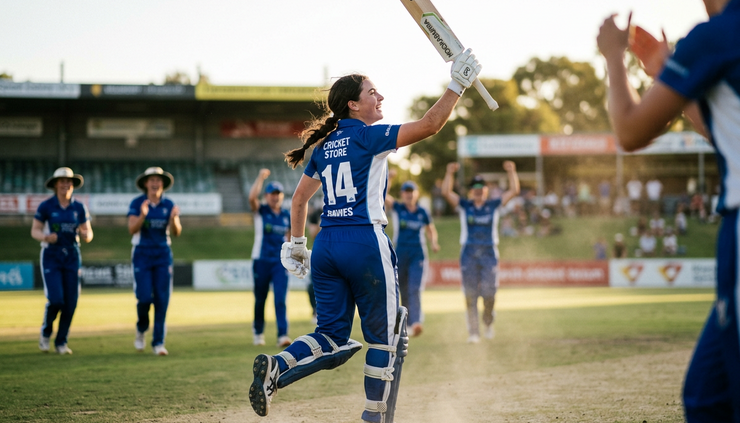
The rise of women’s cricket is not a future prediction. It is already happening. Stadiums are fuller. Matches are easier to watch. Players are fitter, stronger, and more tactically aware. Leagues are creating careers. Young girls can now name women cricketers as heroes without having to explain why.
The journey still has gaps. Pay, facilities, coverage, and domestic structures need more work, especially outside the strongest cricket nations. But the direction is promising because the foundation is no longer built only on hope. It is being built on performance, investment, and visible public support.
Women’s cricket has broken many barriers, and it is now inspiring a generation that will not see the sport as borrowed space. They will see it as their own ground, their own pitch, and their own chance to make history.
Comments